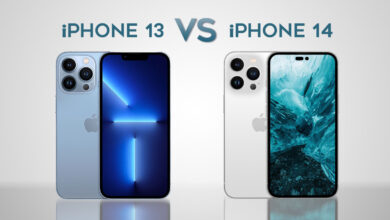
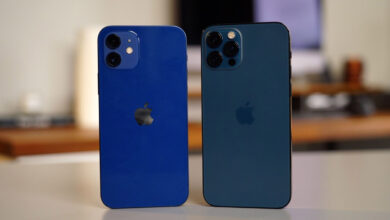
The new iPhone 14 is Apple’s latest smartphone, and it’s a little different from its predecessors. The new model has a 6.7-inch OLED screen, an edge-to-edge glass front with no notch, and a triple rear cored chip for processing speed and power. But, there are some key differences between the 14 and the iPhone 14 Pro Max. As the name suggests, the Pro Max comes with a larger 6.7-inch screen, a bigger battery capacity, and a brighter AMOLED screen that supports both HDR10+ and Dolby Vision. To top things off, the Pro Max has more RAM, better cameras, and a bigger speaker than the standard iPhone 14.
So which one of these two phones should you get if you’re looking for the best deal on an iPhone? We’ll help you out. Here’s everything we know about the iPhone 14 series so far:
Design & Display
- iPhone 14
Size: 6.1 inches
Weight: 172g (6.07 oz), 7.8mm thickness
Resolution: 1170 * 2532 pixel
Camera: 12MP, f/1.5, 26mm wide,12MP, f/2.4, 13mm ultrawide
Feature: Dual-LED dual-tone flash, HDR
Video: 4K@24/25/30/60fps, 1080p@25/30/60/120/240fps, HDR, Dolby Vision HDR (up to 60fps), Cinematic mode (4K@30fps), stereo sound rec.
Chipset: A15 Bionic (5nm)
- 14 Pro-Max:
Size: 6.7 inches
Weight: 240g (8.47 oz), 7.9mm thickness
Resolution: 1290 * 2796 pixel
Camera: 48MP, f/1.8, 24mm wide, 12MP, f/2.8, 77mm telephoto, 12MP, f/2.2, 13mm ultrawide
Features: Dual-LED dual-tone flash, HDR
Video: 4K@24/25/30/60fps, 1080p@25/30/60/120/240fps, 10-bit HDR, Dolby Vision HDR (up to 60fps), ProRes, Cinematic mode (4K@24/30fps), stereo sound rec.
Chipset: A16 Bionic (4 nm)
Battery Life
The iPhone 14 has a Li-Ion 3279 mAh removable battery, while the Pro Max has a Li-Ion 4323 mAh, non-removable battery. These figures translate into approximately 14 hours of usage time for the iPhone 14 and 16 hours for the Pro Max. For reference, the iPhone XS Max offers 22 hours of battery life.
As you might expect, the iPhone Pro Max has a bigger battery due to its size. But, the iPhone 14 still manages to outperform the Pro Max in this department because of its smaller size.
OS / Software
The iPhone 14 runs iOS 16, upgraded to iOS 16.0.2 while the Pro Max runs iOS 16, upgraded to iOS 16.0.2. This means both iPhones have 14 same OS.
Camera Features
The iPhone 14 and iPhone 14 Pro Max both have a different sensor, which consists of 12MP, f/1.5, and 26mm. On the iPhone 14 Pro Max 48MP, f/1.8, 24mm sensor there is also a second sensor that takes advantage of the dual cameras, enabling you to take high-quality images without zooming in.
The iPhone 14 has a 12MP selfie cam, while the Pro Max has a 12MP selfie cam. The iPhone 14 and 14 Pro-Max both have a Dual-LED.
Memory Specs
The iPhone 14 has 128GB 6GB RAM, 256GB 6GB RAM, 512GB 6GB RAM of internal storage, while the Pro Max has 128GB 6GB RAM, 256GB 6GB RAM, 512GB 6GB RAM, 1TB 6GB RAM of internal memory. If you plan on storing a lot of media files, either on your computer or through iTunes, be aware that you have only room for 256GB of data on the iPhone 14.
When it comes to storage, the iPhone 14 has the option of getting either 128GB or 256GB of internal memory, while the Pro Max has the choice between 128GB and 256GB. And, if you want to buy the iPhone 14 Pro Max in Australia, you have the option of buying the 128GB version, instead of the 128GB model sold overseas.
Differences Between the iPhone 14 and iPhone 14 Pro Max
Apart from the obvious visual difference between the two iPhones, there are some subtle differences that you should be aware of. Comes with more RAM (4GB), a wider-angle lens, and better cameras, while the iPhone 14 has a thinner body, smaller battery, and less RAM (3GB).


On the photography front, the iPhone 13 certainly stands its own. The phone comes with two shooters at the back – a 12MP wide and 12MP Ultra-wide lens. In comparison, the iPhone SE 3 has a single 12MP wide lens. However, the A15 Bionic chip means that the phone takes better pictures compared to the second-generation model. Unfortunately, you still miss out on features such as Night mode, cinematic mode, HDR video recording with Dolby Vision, and audio zoom. While the iPhone SE (2022) supports optical image stabilization, the iPhone 13 comes with sensor-shift optical image stabilization.
What They Have In Common

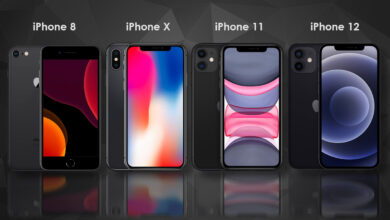
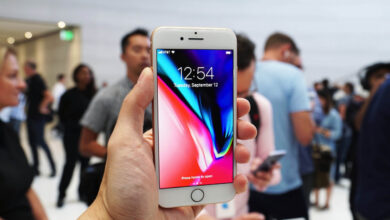
The iPhone 8 makes the perfect choice for anyone looking for a reliable budget iPhone to buy in 2022. Its internals is what formed the foundation for the iPhone X, which means you will receive updates as long as iPhone X gets them. It comes equipped with 2GB RAM and internal storage ranging from 64GB to 256GB. The 4.7inch Retina IPS LCD reaches an impressive 625 nits (typ) brightness, and it also features IP67 water and dust resistance. The
The iPhone X began the full glass front iPhone revolution, and it is still a relevant device today. It comes with a larger OLED panel than the iPhone 8 it was replaced at 5.8 inches but still doesn’t feel clumsy to hold in one hand. The Super Retina OLED with HDR10 functionality displays accurate, sharp, and deeper contrasts and also comes with Dolby Vision. It is the iPhone that finally did away with TouchID and introduced FaceID, which has become the standard for modern iPhones. It featured IP67 water and dust resistance. It came equipped with Apple A11 Bionic (10 nm) chip which was mighty fast at the time and was flanked with a healthy 3GB RAM and 64GB or 128GB internal storage. Apple later increased the range to include the iPhone XR, iPhone XS, and iPhone XS Max, which further improved the specs of the base
There are many reasons to buy the iPhone 11, but the highlight is the raw power of the A13 Bionic chipset. It was faster than most android chipsets of its time and remains pretty punchy today. It is the chip that future-proofed the iPhone 11. And due to its’ immense power, the iPhone 11 breezes through common tasks like app opening and closing apps as well as performance scenarios. Another great reason to own an
The iPhone 12 has been on the market for a while now, and it’s reasonable to expect that you will find plenty of refurbished iPhone 12s to buy in Australia. It is the first iPhone to have 5G support which means it is seriously future-proofed if you want to buy a long-term iPhone. It also has Apple’s Ceramic shield display which offers greater resistance to drops and scratches, meaning it will remain pretty for a long time. Its boxy design complimented by the huge screen-to-body ratio makes it futuristic. Something else you can rely on for as long as you own the iPhone 12 is the Apple A14 Bionic (5 nm), which offers benchmark-crushing performance. The iPhone 12 also comes with 4GB of RAM. This means you may not need to upgrade your phone soon—especially if you get value by buying refurbished. Its bigger sibling, the 

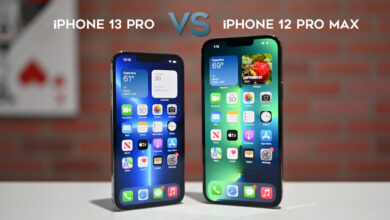
Both phones have three 12mp cameras, a standard wide camera, an ultra-wide camera, and a telephoto camera. Nonetheless, the cameras on the iPhone 13 Pro have much better sensors. The iPhone 13 Pro’s standard wide camera has a sensor with an f/1.5 lens, the ultra-wide camera has an f/1.8 aperture for a 120-degree field of view and a 77mm telephoto that offers 3× optical zoom. The apertures on these cameras allow more light to enter the camera. Hence reducing noise in the photos and enabling better-detailed photos. The camera also has a LiDAR sensor which helps create better portraits on the wide camera in night mode.


Apple has stuck with the 12 MP camera for most of its devices, and it hasn’t changed on the iPhone 11 or iPhone 13. A notable change is that the iPhone 13 has 12 MP, f/1.6, 26mm (wide), 1.7µm cameras with the iPhone 11 having the 12 MP, f/1.8, 26mm (wide), 1/2.55″, 1.4µm cameras. At this point, it’s more of nitpicking because photos look fantastic on both. The features packed with the cameras are also identical, with both phones getting Dual-LED dual-tone flash, HDR (photo/panorama), dual pixel PDAF, sensor-shift OIS, and stereo sound rec. The addition is that the iPhone 13 has Dolby Vision HDR (up to 60fps), which is absent on the