Category: Android

Android is a mobile Operating system that uses a modified version of Linux Kernel and Open-source software that’s specifically created primarily for touch censored mobile devices like tablets and smartphones. Back in 2008, the first Android Device HTC DREAM launched that supports all the android software. Since then, the journey has continued.

  • Android vs. Apple

    Android vs. Apple

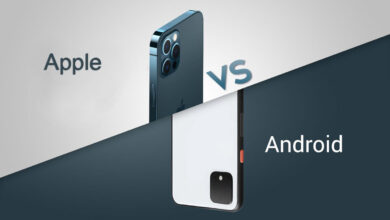
    Android vs. Apple – Why Apple is winning in fast innovation?

    The biggest names in the technology scene are Apple and Android devices. Together, they account for 99% of the smartphone platforms available. But what they don’t share is the level of innovation. Apple is the first name to come to mind when one thinks of class and the latest smartphone flagship features. Apple products are seemingly faster, more reliable, and more composed. So why is Apple leading the innovation race: 

    No Rush

    Unlike Apple, Android manufacturers are always racing to be the first ones to launch a new feature or make a revolutionary device. They often do, but while they get the title of being progressive, most of these features seem half-baked.

    Apple takes its time to develop its products. The result is finished products with great features that are properly integrated into its ecosystem. This ensures Apple avoids any misfires or embarrassing missteps. With so many alternatives, Android devices always need an edge to stand out.

    It’s always a numbers game for android devices, and their launch schedules bring devices with the highest or fastest or largest component or a never-before-seen feature. Apple, however, takes its time to get things right rather than using customers as test subjects. Android devices usually have too many ideas to evaluate and prioritize effectively. Apple doesn’t jump in on every great idea; they take time to refine an idea before sending it to market.

    Apple runs its race

    Apple only competes against itself. No other company designs devices to run on iOS. Once you get into iOS, their ecosystem is tightly-knit, and no other options offer the same benefits as the Apple ecosystem. In applications like the App Store, where iOS users can find apps and games, it has the best selection of apps with the advantage of being strict on quality. Despite improvements, it’s no hard task to find ad-ridden spammy apps on the Playstore on Android. 

    Since Apple doesn’t share iOS, it has no risk of cross-platform compatibility issues with other devices like Android devices. Apple products and features are designed to serve a unique niche that makes it easier to ensure each feature or product works perfectly on each generation of Apple devices. However, they don’t need to strong-arm other OEMs into allowing a part so that users can use both devices.

    One notable difference comes with system upgrades. Android devices take much longer for updates because OEMs have to customize the update and roll it out to their devices. Apple devices don’t have this limitation, making it easier for Apple to test, roll out, update and remove features with no issues.

    Masters of execution

    Apple product launches always pack a punch, and the results are usually astonishing. Apple has always had clearly defined recipes and definitions of success. Their supply chains quickly recover from issues, their marketing is always on point, their chatter is careful and poised, and their books look good. 

    Despite having the most expensive devices, Apple products are always advertised as worth the money. The rise in demand ensures they have the largest piece of the pie. Their dominating market share keeps investors coming and affords them the financial weight to innovate and create better products. As a result, Apple now has the fastest processors on any device, the most rigid security policies, and a reliable ecosystem that ensures every device is in sync with the rest.

    A refined innovation strategy

    From the time of Steve Jobs, “The Walled Garden” has always focused on one path; creating the best product for the customers. Apple designers are known to design without restrictions, build different product iterations, and then spend months perfecting the final product. Managers understand what they want from the new products and communicate them effectively and clearly. Their creative meetings & production meetings culminate in an organized development process from mockups to the final product.

    Unlike other platforms, Apple isn’t hung up on numbers; their design process is people-first. Their intention to develop products with a focus on improving users’ lives makes their products an easy recommendation. Android platforms struggle to be on top of the pack. Their difference in mentality and motivations makes it hard to define a single innovation strategy to rule them all.

    Apple’s corporate culture and innovative thinking translate to its rigorous employee selection process, ensuring they hire the best talent. They hire smart people and give them the creative freedom and flexibility to design and innovate products that change the world. 

    Apple will always lead until Android manufacturers find a way to pool their efforts.

  • Battle Of The Flagships – Apple iPhone 12 vs. Samsung S21

    Battle Of The Flagships – Apple iPhone 12 vs. Samsung S21

    [padding top=”0″ bottom=”0″ right=”5%” left=”5%”]


    If you have been on the market for a new flagship device in 2021, Apple’s iPhone 12 and Samsung’s Galaxy S21 have probably crossed your radar. How couldn’t they? These are some of the best smartphones currently out there, it is impossible not to notice them. However, buying them can also put a huge dent in your budget. Fortunately, in this day and age, smartphone manufacturers and retailers are all about offering options to their customers. And one of the options they graciously offer us is refurbished smartphones.
    Refurbished smartphones are pre-owned devices that have been sent back to the manufacturer because they were faulty and repaired for resale. They work like new, but if this still doesn’t give you the confidence to buy them, you will be happy to know that they tend to come with the usual smartphone accessories and a warranty on top in case of any future problems. Wondering why you should even remotely consider a refurbished iPhone 12 or refurbished Samsung Galaxy S21, here are some of the features that make these devices so great, stacked up against each other for your comparison.

    Price

    Like with all newly released flagship devices, you will need to pay top-dollar to acquire the iPhone 12 or Galaxy S21. On release, the S21 base model went for AU$1,249, with the S21 Plus coming in at AU$1,549 and the Galaxy S21 Ultra at AU$1,849. The iPhone 12 range features four devices, the base model being the iPhone 12, which is available at $1,349 for the 64GB model. The iPhone 12 mini is the cheapest variant coming in at $1,199 for the 64GB model, and the iPhone 12 Pro Max is the most expensive at $1,849 for the 128GB model.
    As you can see, the iPhone 12 and Galaxy S21 are similarly priced. However, the S21 comes up as the clear winner here for the features you get at each price point. Now that it has been a couple of months since these phones were released, you can expect some slight price declines. But the prices might still prove hefty for most; hence the reason you should consider getting a refurbished or preowned iPhone 12 or Galaxy S21.

    Display

    The iPhone 12 and Galaxy S21 match up when it comes to displaying size. The S21 is slightly larger at 6.2 inches compared to the iPhone 12’s 6.1 inches – you are unlikely to notice any difference. The S21 has an AMOLED display, but it’s with the 120Hz adaptive refresh rate where it truly shines. Comparatively, the iPhone 12 packs a Super Retina XDR OLED display, with a refresh rate of 60HZ but a slightly sharper 2532×1170 resolution. That said, the S21 feels noticeably faster and snappier.

    Design

    The iPhone 12 comes with Apple’s typical large notch, which Apple more than makes for with a glass back that gives it a premium, classier feel. Samsung swamped the rear glass panel of its predecessor with plastic. You will still get the more premium glass back on the Plus model. You also get plenty of colour options with both devices that basically comes down to personal preference.

    Camera

    In true Samsung fashion, the S21’s camera does not disappoint. It features a triple rear camera system, identical to the S20s, composing of 12MP main sensors, 12MP ultra-wide-angle sensors, and 64MP vs. 12MP zoom cameras, giving this phone better zoom capabilities. Apple also opted to stick with the same camera hardware as that of its predecessor, the iPhone 11. It has a 12MP camera boasting of bright f/1.6 focal aperture and outstanding video recording performance. The selfie cameras stack at 12MP for the S21 and 10MP for Apple, with both supporting 4K video recording.

    Storage and Processor

    As expected, both smartphones come with the latest chip tech. The iPhone 12 is powered by Apple’s very own A14 Bionic processor, while the S21 features either the Qualcomm Snapdragon 888 or Samsung Exynos 2100. When it comes to storage space, the S21 and iPhone 12 are available in different configurations. With the former, you get either 128GB or 256GB, both with an 8GB RAM combo, while the latter comes with a choice of 64GB, 128G, or 256GB, with 4GB of RAM. Despite this difference, the iPhone 12 and Galaxy S21 are equally powerful.

    Battery Life

    This is one of the areas where the iPhone 12 and Galaxy S21 have the biggest difference. The S21 boasts a massive 4,000 mAH battery, while its competitor comes in at just 2,815mAh. They both support fast charging and wireless charging, with the S21 offering Wireless Power Share, a handy feature when you need to wirelessly charge other devices.

    Connectivity

    As the giants in the smartphone manufacturing industry, Apple and Samsung have been quick to innovate with 5G, as evidenced by these devices. They both support 5G connectivity, with the iPhone 12 notably being the first iPhones to support 5G networks. This means you should enjoy streaming high-quality videos, downloading movies, and Facetime in HD at superfast speeds.

    Final thoughts

    The iPhone 12 and Galaxy S21 are both great devices, with a lot to offer and stack pretty well in terms of functionality and productivity. But which one should you go for, especially as refurbished? It’s a fierce battle indeed, but the ultimate winner truly comes down to the features you value most and which works best for you. Whichever you decide to choose, you can be guaranteed that you are getting a powerful device and significant value if you were to buy it refurbished. [/padding]